Feline Senior Life Stage: The Science vs. The Marketing of Aging Cat Diets
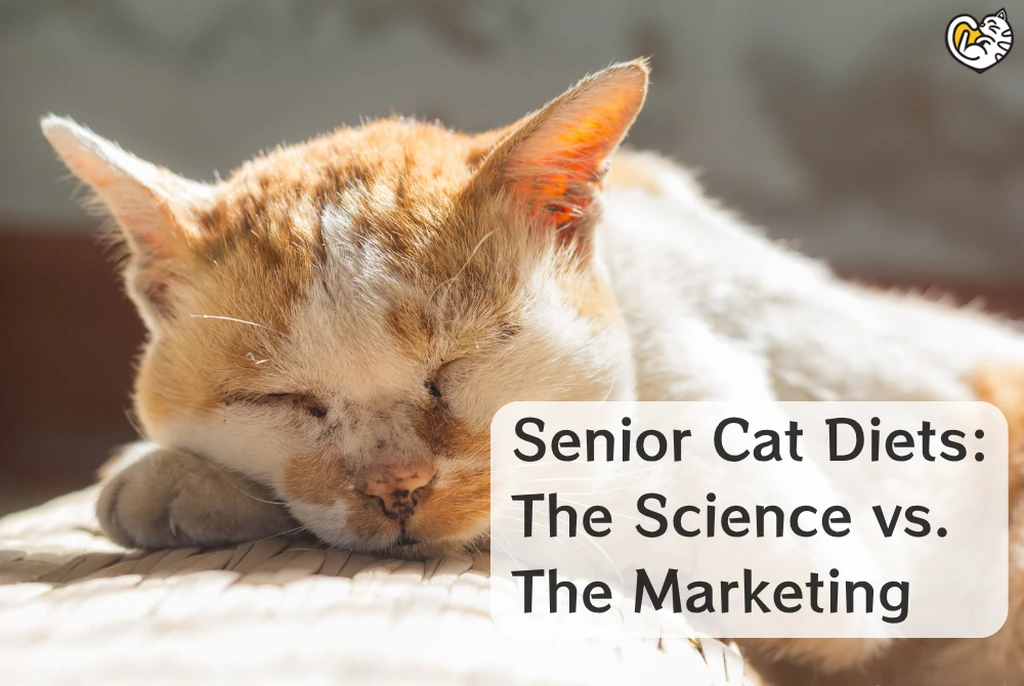
The pet food aisle is filled with bags of kibble featuring silver-muzzled cats and promises of “Age 7+ Vitality” or “Senior 11+ Longevity.” To the consumer, these labels imply a carefully standardized, scientifically backed nutritional profile designed specifically for an aging animal.
The regulatory reality, however, is completely different.
According to the Persatuan Pegawai Kawalan Makanan Amerika (AAFCO), there is no official regulatory “Senior” life stage for felines. AAFCO recognizes only two nutritional profiles: Growth & Reproduction (kittens and pregnant/lactating queens) and Adult Maintenance.
Any commercial diet labeled “Senior” or “Mature” is legally formulated to meet standard adult maintenance requirements. The specific tweaks made to macronutrients, calories, and minerals are entirely up to each manufacturer’s interpretation of aging.
In fact, an independent study analyzing 31 commercial diets marketed for senior cats found that their levels of crude protein, fat, and minerals were statistically identical to standard adult formulas. [1, 2]
Yet, peer-reviewed veterinary science proves that an aging cat’s biological and metabolic requirements change drastically. This mismatch means owners must look past front-of-pack marketing and understand the real, scientifically documented shifts in feline physiology. [1]
The true science of senior feline nutrition is divided into two distinct biological phases.
Phase 1: The Mature “Middle-Age” Shift (Ages 7 to 11)
At approximately seven years of age, a cat transitions into what veterinary behaviorists and nutritionists classify as “mature”. During this window, the metabolic profile undergoes its first major shift, driven heavily by changes in energy expenditure.
The Obesity Trap and Reduced Maintenance Energy Requirement (MER)
Long-term metabolic studies have demonstrated that a cat’s Maintenance Energy Requirement (MER) – the number of calories required to maintain a stable body weight, gradually decreases until roughly 11 years of age. [1]
- The Mechanism: This decline is primarily behavior-driven rather than organ-driven. Cats become more sedentary, sleeping longer and playing less. However, their digestive system remains highly efficient at absorbing nutrients. [1]
- The Clinical Outcome: If fed the same calorie-dense adult diet, mature cats rapidly gain fat mass. Middle-aged feline obesity peaks between ages 7 and 10. [1, 2]
Evidence-Based Nutritional Interventions (7–10 Years)
Aging cats actually need more protein, not less. A published study shows that higher-protein diets help older cats avoid losing lean muscle mass. Healthy mature and senior cats should not be protein restricted. A moderate protein diet, with at least 30-45% protein on a dry matter basis, is recommended. [1]
Cats with chronic kidney disease are different. They may benefit from a prescription renal diet, which has restricted but high-quality protein (eg: from real meat, not meat meal or plant), lower phosphorus, and other ingredients that support kidney health. [1]
Phase 2: The Geriatric “Super-Senior” Shift (Ages 11+)
At roughly 11 to 12 years of age, the feline body undergoes a radical, physiological reversal. While a 9-year-old cat is typically battling weight gain, an 11-year-old cat enters a stage of vulnerability characterized by unintended weight loss and muscle wasting (sarcopenia). [1]
FELINE AGE PROFILE CALORIC NEED INVERSIONS:
- Ages 1 – 7 (Adult) = Baseline
- Ages 7 – 10 (Mature) = Decreases / Obesity Risk
- Ages 11+ (Geriatric) = Increases / Sarcopenia Risk
The Breakdown of Nutrient Digestibility
The most critical scientific discovery in geriatric feline nutrition is the age-related decline in macronutrient absorption. Published data in the Journal of Nutrition and the Journal of Feline Medicine and Surgery reveals that a significant portion of healthy aging cats lose their ability to break down basic foods. [1, 2]
- Fat Malabsorption: Approximately 30% to 33% of cats older than 12 years suffer from a reduced capacity to digest lipids. A landmark study evaluating young versus geriatric cats (mean age 11.6 years) fed identical fat sources found that older cats exhibited significantly lower apparent digestibility across all fat categories (saturated, monounsaturated, and polyunsaturated). [1, 2]
- Protein Malabsorption: Roughly 20% of cats over age 12 cannot effectively break down and absorb dietary protein. This causes a chronic negative nitrogen balance, forcing the body to catabolize its own skeletal muscle for energy, leading to a dramatic loss of lean body mass. [1]
The Geriatric Hyper-Metabolic State
Contradicting the general rule of mammalian aging, the energy requirements of senior cats actually increase after age 11. Because their digestive tracts are failing to absorb up to a third of the fat and a fifth of the protein they consume, geriatric cats must consume more calories relative to their body weight just to stay stable. This explains “skinny old cat syndrome,” where an elderly cat eats ravenously but continues to drop weight. [1, 2]
Critical Mineral and Hydration Homeostasis
Beyond macronutrients, the clinical management of a senior cat requires a precise understanding of renal plumbing and hydration kinetics.
Phosphorus Restriction vs. Protein Maintenance
Chronic Kidney Disease (CKD) affects an estimated 30% to 80% of elderly cats. Even before clinical renal failure is diagnosed via blood work, excess dietary phosphorus acts as an accelerant for kidney damage.
- The Dilemma: Historically, pet food companies reduced overall protein to lower phosphorus, since phosphorus naturally hitches a ride on meat proteins. However, doing this to a healthy geriatric cat with protein malabsorption accelerates muscle wasting.
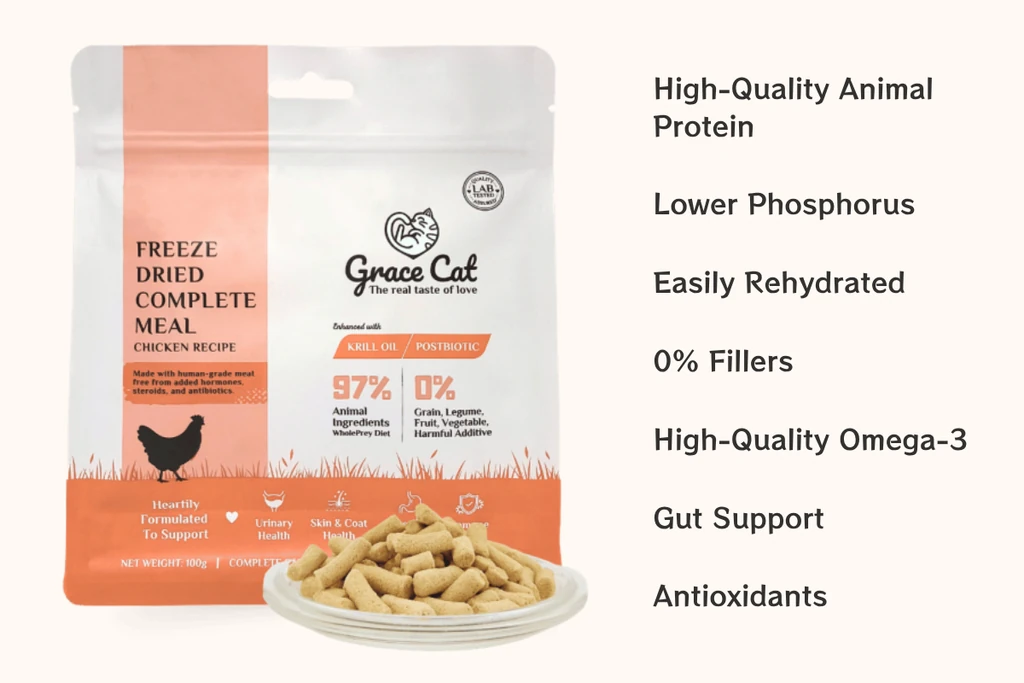
- The Scientific Solution: Geriatric diets must utilize highly bioavailable, premium animal proteins that yield a low phosphorus-to-protein ratio, avoiding cheap, mineral-heavy bone meals or meat meal or excessive plant proteins that strain the kidneys, which was commonly found in kibble.
Thirst Blunting and the Nephron Crisis
Cats have a evolutionarily low thirst drive, relying naturally on moisture-rich prey. As they age, their cognitive thirst sensitivity dulls even further. Paired with the aging kidney’s declining ability to concentrate urine, senior cats live in a state of chronic sub-clinical dehydration. This increases the workload on remaining functional nephrons (kidney units) and predisposes them to constipation and lower urinary tract issues. [1]
Many people believe that kibble makes cats thirsty, so they will drink more on their own. Cats on dry food do drink more, but not enough to make up for the missing moisture. Their total water intake is still much lower than cats eating moisture-rich food.
Scientific Evaluation of Commercial Labels
When evaluating commercial diets, science-focused owners should look past marketing terms and evaluate the food based on specific laboratory and compositional metrics:
| Nutritional Component | Active Adult (Ages 1–7) | Mature Senior (Ages 7–10) | Geriatric Super-Senior (Ages 11+) |
|---|---|---|---|
| Caloric Density | Standard | Reduced | Elevated (High calorie-density / easily accessible energy) |
| Primary Macronutrient Target | Balanced protein and fat for activity | Lower fat | Highly digestible animal protein & fat (easily broken down lipids) |
| Phosphorus Concentration | Standard AAFCO baseline | Standard / Controlled | Strictly restricted (<0.5%–0.6% DM to protect kidneys) |
| Dietary Format | Dry kibble or wet food accepted (moisture-rich food is best) | Dry kibble or wet food accepted (moisture-rich food is best) | Strictly wet / high-moisture (>70% water to protect kidneys) |
| Targeted Supplements | General health baseline | Weight management aids | Omega-3 (EPA/DHA) for joint inflammation; antioxidants |
Actionable Strategy for Cat Owners
If you are managing an aging feline, do not trust a bag simply because it says “Senior”. Instead, deploy a clinically sound approach: [1]
- Track Weight and Muscle Mass: Weigh your cat monthly on a precise digital scale. A steady downward trend in an 11+ year old cat is an immediate indicator of nutrient malabsorption or underlying metabolic disease (such as hyperthyroidism or CKD), requiring a pivot to a highly digestible, calorie-dense formula.
- Read the Guaranteed Analysis: Look for foods that specify their phosphorus levels on a dry-matter (DM) basis, particularly aiming for low phosphorus if your cat is advanced in age. Ensure the first ingredients are named animal proteins (e.g., “chicken breast”), not generic animal by-products or meal meal or plant proteins.
- Transition to Moisture-Rich Diets: If your senior cat eats exclusive dry kibble, proactively transition them to canned wet food or rehydrated freeze-dried food. The dramatic increase in hydration provides vital support for their metabolic functions, joints, and kidneys as they age. [1, 2]
Still feeding low-quality pet lick treat to your pets?
You could be giving them a time bomb in disguise — one that slowly harms their health, weakens their immunity, and makes them sick.
It’s time to switch to safer, healthier options — before it’s too late.
Try out our gloow Nutrition Pet Lick – The first Algal Oil & Postbiotic Pet Lick in Malaysia